
Drug User Health Certificate Series
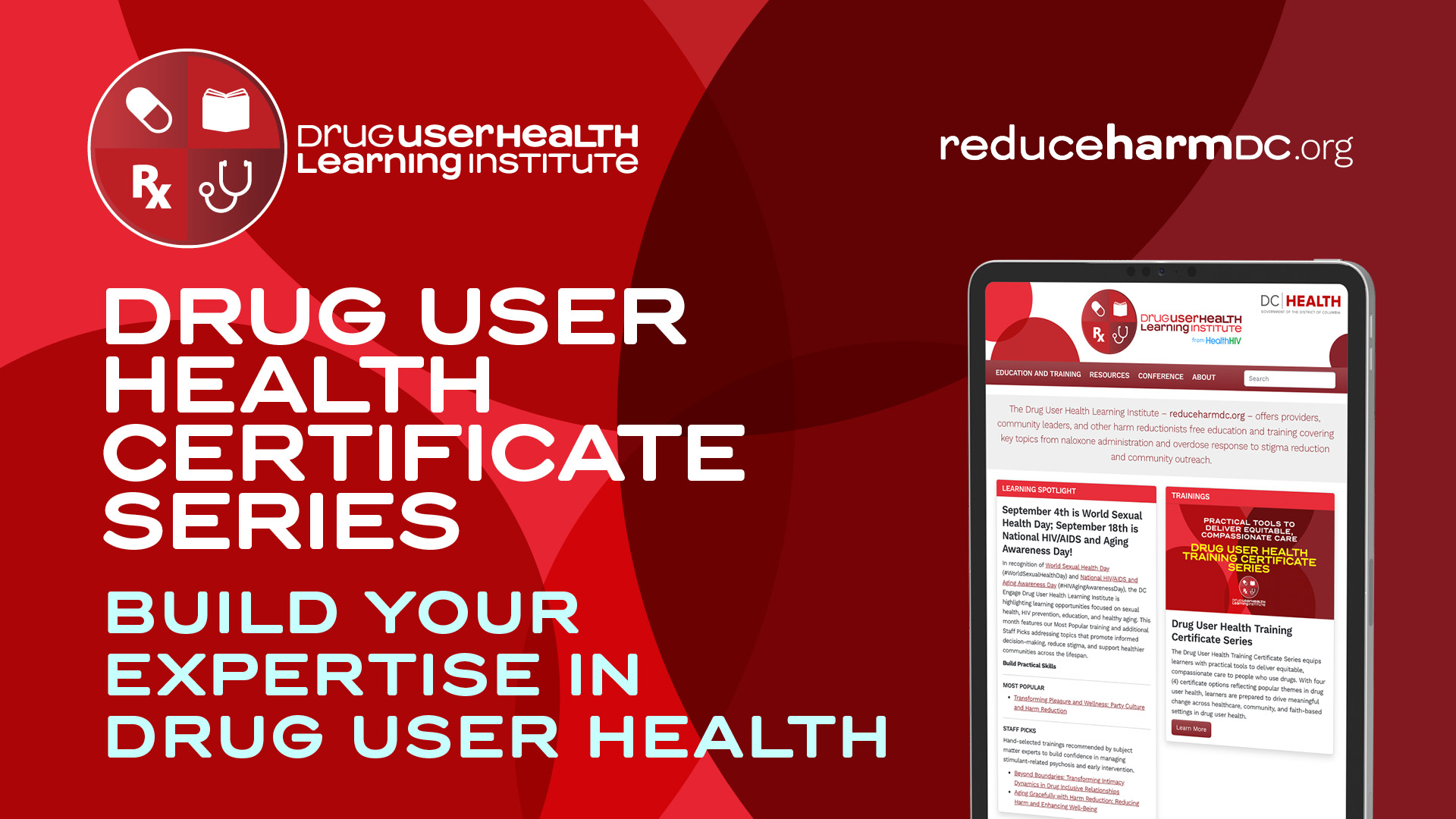
The Drug User Health Certificate Series equips learners with practical tools to deliver equitable, compassionate care to people who use drugs. With four (4) certificate options reflecting popular themes in drug user health, learners are prepared to drive meaningful change across healthcare, community, and faith-based settings in drug user health.
Credits/Contact Hours
Some modules are accredited and participants can earn Credits/Contact Hours.
Target Audience
This program is designed for clinical staff, pharmacists, physician associates, physicians, providers, psychologists, registered nurses, social workers and other staff involved in drug user health are encouraged to participate.
Cost
You may access these trainings at no cost.

Health Equity Certificate
This track explores how social determinants, stigma, and systemic inequities shape health outcomes for people who use drugs. Learners will gain a deep understanding of trauma-informed care, medical mistrust, cultural competence, and faith-based healing as foundations for equitable service delivery.
Access This Training
Clinical Drug User Health Certificate
Designed for healthcare professionals who provide direct care to individuals with substance use disorders. This track focuses on clinical best practices, ethical considerations, and evidence-based approaches to pain management, addiction treatment, and patient engagement.
Access This Training
Communities and Populations Certificate
Focuses on the unique needs and lived experiences of populations often overlooked in traditional overdose prevention and response activities frameworks—including aging adults, youth, families, pregnant patients, and returning citizens.
Access This Training
Drug User Health Leadership Certificate
Encouraging current and emerging leaders to drive systemic change through collaboration, policy, and program design. This track bridges public health, community organizing, and overdose prevention and response leadership to build sustainable, equitable systems of care.
Access This TrainingMore Professional Development
for the Drug User Health Workforce
Community-Focused Learning
Access This TrainingCommunity-focused learners have the opportunity to earn certificates at four levels focused on cultivating empathy, policy insight, and community collaboration skills to reduce stigma, enhance equity, and promote public health outcomes.
Level I: Foundations of Person-Centered Public Health
Introduces essential principles, addresses stigma, and highlights the power of public health partnerships in promoting person-centered care.
Level II: Trauma-Informed Community Engagement
Builds on foundational knowledge and equips participants with trauma-informed, compassionate approaches to community engagement.
Level III: Overdose Prevention for Justice & Equity
Examines overdose prevention and response activities as a catalyst for justice and equity.
Level IV: Leading Integrated Overdose Prevention Systems
Enhances participants’ capacity to lead integrated overdose prevention and response initiatives, bridging systems, championing collaboration, and sustaining meaningful change in the community.
Clinical Care Workforce Learning
Access This TrainingClinicians will gain the tools to balance safety and empathy, integrate overdose prevention and response principles into medical practice, and lead systems change in addiction and behavioral health care with four levels of learning. Many courses offer CEUs.
Level I: Clinical Foundations of Overdose Prevention & Response
Introduces core clinical concepts in overdose prevention and response, addressing stigma, enhancing communication, and supporting relationship-centered care in medical settings.
Level II: Ethical & Trauma-Informed Clinical Care
Expands clinical knowledge by emphasizing ethical, trauma-informed care and navigation of complex clinical presentation
Level III: Advanced Screening, Diagnosis & Care Linkage for OUD/SUD
Develops advanced skills in equitable screening, diagnosis, and care linkage for OUD and SUD, with emphasis on pain management, language justice, and retention in care.
Level IV: Clinical Leadership in Overdose-Informed Care
Equips clinicians to lead overdose-informed care through advanced prescribing, pain management, and stimulant use treatment.